Search This Blog

Showing posts with label winter garden. Show all posts

29 December 2008

It's Still Winter in The Garden


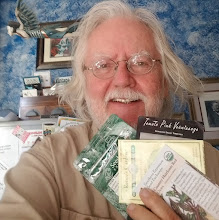
One of the Learning Garden's volunteers, Carolina, shows a handful of carrot seed prior to sowing them on a prepared bed and covering with screened compost. Thoroughly watering the freshly planted seeds is last step.


It’s still Winter in the Garden and we are still very much planting winter vegetables – while in the catalogs we are looking at summer veggies, we are still planting winter’s crops. We won’t begin to sow summer seeds, until the end of January – and even then, we are pushing the envelope – I want to get early tomatoes in especially early so our high school gardeners can harvest a ripe tomato before they leave for the summer (it seems like a long way away, but our foggy, cool coastal climate slows tomatoes down to a crawl until July through September when we get some real heat).

Today in the Garden we were sowing carrots. We could have also sown beets, parsnips, radishes, and turnips, but we were fixed on carrots today. I lost a baseball bet with Mike McGrath, infamous from a variety of horticultural pursuits, including currently hosting WHYY’s “You Bet Your Garden.” Mike is a rabid Phillies fan - but then, there is no other kind, they're all 'rabid,' and I am a Dodger fan, so when the Dodgers faced the Phillies in last year’s National League Pennant Championship Series, I challenged him with a bet of five pounds of carrots – somehow he figured that I was already growing five pounds of carrots, but I had no intention of losing.

Thus it was that we sowed carrots – a lot of carrots to fulfill payment to the winning Mr. McGrath, and we transplanted cabbages from starter pots in the greenhouse out to the garden. We have baby plants of lettuce, broccoli, more cabbage and celeriac in pots a few weeks away from setting out in the garden. He can gloat with his victorious baseball team, but I wonder what he's planting two days from New Years?

After setting the cabbages out in the garden, we sowed more seeds of lettuces (four different varieties – including Red Deer Tongue, Green Deer Tongue, and two others) for setting out in the garden in the next month. We will still start more seeds of broccoli, cabbage and lots more lettuce – I’ll keep starting lettuce up through May although I’ll switch to varieties described as “heat resistant” like Summertime and Jericho and I’ll plant them in dappled shade – and I’ll be direct sowing more seeds in the garden of beets, parsnips, and other root crops in spots here and there. Here and there, I might also sow a short row of arugula, spinach and other greens that don’t like heat.

We did get some rain last week and the soil is soft which makes for pulling weeds easier than normal so we’ve also been doing some good weeding too. Even the really long rooted mallow plants come out more easily – as long as they aren’t above belt high and then you need to inspire them with a hand grenade or something to free that tap root from its hold on the soil. (On the other hand, these plants do bring up nutrients from the subsoil and make a wonderful addition to a compost pile.)

It’s a gorgeous time to be a gardener in Los Angeles; this is one of our premier times in a Mediterranean garden. Grab a cup of coffee and come on out into the Garden – it’s like a Monet painting.

david

25 November 2008

Planting Before a Rain


Rain comes rarely in Southern California. We net something like twelve inches per year on average and almost all of that falls in the months of January, February and March. There is usually one small shower in July and October without any appreciable accumulation, and a shower or two in November and December that are a little more beneficial. Right this second, our gardens are really dry and we will be grateful, with or without Thanksgiving, for any and all rain showered upon us.

Rain is forecast for the next few days, and we hear from folks about a mile away that it’s heading towards us right now. Just in time, I’ve run wildly through the garden trying to take advantage of this by sowing seeds of carrots, beets, parsnips, spinach and lettuce. (I think the plural of lettuce is ‘letti’ despite the protestations of my spell check that insists lettuce has no plural. Obviously not composed by a gardener…)

Normally I plant small, short rows of these and I sow them every several weeks in an attempt to provide myself with some fresh produce consistently through the season. I am single – I don’t need a forty foot row of carrots or beets or of anything else – I don’t even have forty feet of garden from any direction anyway! I use a garden stake, about 1” square, that was sold with a vine wrapped on it. Originally about six feet long, I’ve cut this down to a two foot length. By turning it on edge, looking at it from one end, it’s a diamond shape, I have an edge I can press into the soft soil where I want to plant, as shown above. This creates a perfect two foot trough in which I can sow my seeds. For carrots, and carrots only, I do not cover the row with soil. Our soils in Southern California oftentimes crust over when they dry and that crust can be too hard for the little carrot seedlings to push through. Other seedlings aren’t as delicate and can break out of the ‘earth jail’ so they don’t get the treatment. Although the vermiculite does mark the row quite nicely.

But, with rain coming and a gathering supply of old seed, I have decided to let ‘er rip! We have carrots from last year and spinach and lettuce that’s older than I want to admit so we’re sowing them out thickly. The rain comes through, waters these seeds for us and, if we get good germination, they’ll be a bonus. I would like a large amount of beets and/or carrots at once just for pickling. I have a great recipe handed down from my Mother for pickled beets and I want very much to try a good recipe for those spicy pickled carrots one finds at Hispanic restaurants – if you know of a recipe like that, send it on over.

Just a note on germination. Seeds vary in the length of time they can be kept before the germination percentage drops off, from carrots which seem to last just about a year before they’re no better than dust, to tomatoes which can keep for about seven years without much loss of vigor. Seeds kept cool and dry will last longer than those kept under more difficult conditions and I'll explore that topic one of these days on down the line.

I see raindrops… is this it or just false advertising?

david

The Calendar of Events At The Learning Garden

Followers