Search This Blog

19 June 2011

Greener Gardens Offered By UCLA Extension in Summer Quarter

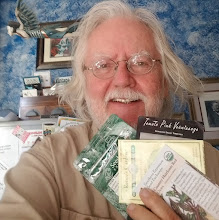
Orchid Black and I on a field trip Spring Quarter 2010, the last time we taught ‘Greener Gardens: Sustainable Garden Practice’ 

UCLA Extension offers this class in Summer Quarter this year, starting Thursday, June 23, 6:30 PM in Botany 325, on the UCLA campus. People who take this class will get the benefit of the breadth of experience that each of us brings to sustainability in the garden. This class fulfills an elective for the certificate programs in both Horticulture and Global Sustainability.

We will cover sustainable design, soils,  swales and earthworks, appropriate use of greywater and rainwater harvesting, along with the basics of native and drought-tolerant planting. All aspects of sustainable backyard food will be addressed.

The UCLA Extension catalog, lists the class as follows:

“Sustainability is today’s buzzword and many people seek to create a lifestyle with a more favorable impact on the environment. From home and school gardens, to commercial sites, our gardens present the perfect place to start. Designed for horticulture students, gardening professionals, educators, and home gardeners, this course focuses on turning your green thumb into a “greener” garden. Topics include composting, irrigation, water harvesting, water wise plants, eating and growing local produce, recycling, and moving away from a consumptive, non-sustainable lifestyle when choosing materials and tools. … “

I taught this course as a half elective on my own for two years before being able to team up with Orchid. Her knowledge and effective teaching puts this class into its own league.  Orchid is an award winning designer of California Native gardens, a delegate to the state-wide organization of the California Native Plant Society and did excellent work on the Los Angeles County Native Oak Ordinance Working Group. She has studied water issues for several years and has a keen understanding of the problems we face around that issue. She blogs at Native Sanctuary.

On another front, I return to Los Angeles on Sunday the 26th and be a panelist for the upcoming Dwell on Design event.  In the mix of the events right now, I was quoted by the Los Angeles Times in their article on the Seed Library of Los Angeles. 

Here’s a link to UCLA Extension page for the class, which still has a few spaces open:

13 May 2011

Resilient Food Systems Begin with Locally Adapated Seed

I have been reading a The Resilient Gardener, by Carol Deppe - she's the one who wrote 'Breed Your Own Vegetable Varieties: The Gardener's and Farmer's Guide to Plant Breeding and Seed Saving' which I love so much.  Deppe is a wonderful thinker and I love the concept of honing our gardening skills to be better gardeners when times are good so we can carry on when times aren't so good.  She makes a good case for this kind of thinking using examples from her own life and from the greater society. 

Resilience has become a buzzword because of the Transition Town movement that started in England.  I allow that resiliency is a good goal, but it's a tricky one to achieve here in Los Angeles, dependent so much, as we are, on imported water and the electricity it takes to get it here.  Still, allowing for that, Fred Kirschenmann has written a blog post on saving seeds as one of the first steps in developing a resilient gardening paradigm.  
 
The blog post and the book are both well worth your time.

david

21 April 2011

How Mulch Is Too Mulch?

A fresh load of compost/mulch was delivered at The Learning Garden and I got to run my fingers through this stuff right off the truck!  Gardeners love the way this stuff smells.  Mere humans often dislike it. Compost can be a mulch - it is not necessarily 'mulch' but can be used as one. 

Jeanne Kuntz is preparing a post for over at Mar Vista Patch using a clever play on the word 'mulch' (Mulch to be Grateful For) so, I couldn't resist getting a little punny here.

A bit of Q & A between myself and Jeanne follows:  


JK:  How does mulch condition the soil?

When mulch is laid on soil, it stops sun rays from hitting the soil and baking the top layer.  The mulch also prevents water evaporation by breaking the water column in the soil.  (Water molecules stick together and 'pull' water through the soil.  In evaporation, one molecule evaporating causes the next molecule to move towards the surface to evaporated.  When the soil medium is no longer homogeneous, i.e. mulch on top has a different consistency than the soil, the water column is broken and evaporation of below- surface water is stopped.) 

But mulch's big contribution to the soil is that it provides food for a whole host of critters in the soil that break the mulch down.  Mulch feeds the micro and macro life of the soil and THAT increases soil's fertility.  One of the main critters chowing down on the mulch is the earthworm.  The earthworm makes a tunnel from below to the surface to chow at the mulch banquet, grabbing a plateful, which the earthworm carries below the surface, creating yet another tunnel.  Many earthworms = many tunnels - painlessly, effortlessly creating the same delicious soil tilth we used to double dig, breaking out back, to achieve.  I've got garden beds that have never been dug and you can easily put your hand into them as though I had spent days out there sweating by double digging.  

What is the main difference between the various types of mulch?

Well, 'mulch' is technically anything you put on the surface of the soil to protect it.  That includes rocks and plastic and other materials.  We are, I think, talking about 'organic mulches' - the ones that used to be plant material (leaves, wood chips, compost or even bagged materials like 'organic compost' or 'planters mix') and they have differing effects on the soil.  If it is broken down to the point of being more black than not, it does what I was saying above.  The differing mulches will contribute slightly different nutrients to the soil, but, in the main, there isn't much difference in their action - some will break down more slowly and some more quickly, but they will all break down and feed your soil biota.

JK:  Is there are difference between how one uses mulch for edibles vs ornamental plantings?

I wouldn't think so.  I think mulch in flower borders is much more attractive than dirt - it saves water and cuts down on the need of fertilizers.  I add mulch about three inches deep in spring and in fall and that's all I add to my garden, ornamental or veggie. 

JK:  Is the mulch you have at The Learning Garden at Venice High School available to the public?
The Learning Garden's mulch is from Los Angeles Bureau of Sanitation and is delivered to us because we make it available to the community at large.We are open Wednesday through Sunday, from about 10 to about 5:00 - I say 'about' because I'm there alone and if I have to pick something up from the hardware store or go to lunch, that means we're closed for that amount of time.   

And by the way The Beautiful Food Garden Blog turns three today!  Thank all of you for your support!

david

18 February 2011

Loss of a Mentor

Jim Otterstrom died January 22nd, his memorial service will be held in his home town of Big Bear. 

Jim, and his wife Peggy, became my friends through my association with Orchid Black. They were close friends of hers, living a lifestyle that closely approximates her dreams. I spent only a few hours with Jim and Peggy, but found them to be like-spirits and I too admired their car-less life that had such low impact on the earth. Jim took fantastic photos and posted them to his blog. Peruse some of them if you will.

Orchid will read some poetry and I will play a couple of songs in the memorial service. He had head me play these songs the first night I met him and he approved of them. Music and art of all kinds figured large in Jim's life. The memorial service has been lovingly titled, “Otter-Strum” with a large of host of talented musicians of all flavors.

I wish I had many more hours with Jim in his garden, with his chickens and in their home. It inspired me to press on with my personal vision of how my life will be. I owe him a debt that will probably only be repaid by living the life of my own dreams, in my own way, on my own land.

I am grateful that I was offered the opportunity of knowing Jim Otterstrom. 

david 


Urban Homestead, Urban Homestead, Urban Homestead

A 'city-chick' pecks in her 'urban homestead' yard.  Doubtless she doesn't care about the controversy and maybe we could take a cue from her.  

There are major forces arrayed to stop people from living the homestead dream – in the city and in the country. There are big corporations that believe you need to pay them before you can plant a garden – or that you should not bother to plant a garden at all but buy your food from supermarkets – food that has been grown from trademarked and patented seeds, grown with trademarked and patented inputs like fertilizer and pesticides. The homestead movement, both urban and rural, has a huge fight on its hands everyday of the year against these corporations and the government they control.

On Facebook, the biggest buzz between most of my friends has not been against Monsanto or the Obama administration, or events in Egypt but against one of our own: Path to Freedom, a pioneering family (the Dervaes) project in Pasadena, trademarked the term “urban homestead” and began sending cease and desist letters (NB:  OK, so technically they are not 'cease and desist' letters, not actually using those words... However, read what the Dervaes posted - in their own defense - and tell me if that is an unfair characterization.)   to other urban homesteaders. It was a shock that one of the leaders in this field had become the 'other' and indulge in the same practices associated with land rapers and profiteers.

Let there be no mistake: It is hard to discount the inspiration, if not applicable information, from the Dervaes family. I got to visit their homestead before they were the famous icon of the movement they became. By that point, tours of the homestead were not on their agenda, they were too busy with increasing productivity. Their blog is often referenced in conversations and many people in the homestead vein relish telling newcomers about the chickens, ducks, goats and amazing productivity of the Path to Freedom project.

But we now are fighting between ourselves, those of us who are, or wish to be urban – or rural – homesteaders. Most are aligned firmly against the Dervaes' family simply because they recognize that this is headed to wasted energy that should be used in furthering the cause. There is no ultimate 'urban homestead' worthy of the trademarking of the name. There will never be. It, like the people who flock to be homesteaders, is an ever evolving idea, concept. To attempt to trademark the name is as foolish as an attempt to pin the concept to the present time.

Why even try? There was some feeble defense on the Dervaes' blog that they were trademarking it so the term couldn't be co-opted by industrial imitators. Good move. We know how 'organic' and 'natural' mean nothing any more because they have become ad terms describing something more natural, say, than steroid injections. However, if that was the real idea, why did the cease and desist letters go to those who aren't industrial – the Institute for Urban Homesteading, Eric Knutzen who authored, “The Urban Homestead” or Santa Monica Farmers' Market Association when they did a seminar on the subject? If that was honestly the thought behind the trademarking move, it begs even further explanation because the targets ostensibly were on the same side of the Dervaes family's ideology. It doesn't make any sense.

I conclude it was hubris. The Dervaes have done much and much is owed to them. Somehow, though, they seem to feel that they deserve homage more than recognition. They seem to feel that their advances in urban homesteading are so complete and revolutionary that they alone have the right to be 'urban homesteaders.' This is not true. They wish to deny all of those, for hundreds of years, that went before them, with no trademarks on anything they did, and those that will follow and will take the urban homestead to even greater pinnacles. 

On their website they state:  "We have now secured registered trademarks for certain unique names and images. By protecting our intellectual property we are better able to ensure that our work is presented accurately and contributes to our sustainable living projects and educational initiatives."  Unique?  Our intellectual property? Our work?  Our sustainable projects? They obviously believe that they somehow have come to own 'urban homesteading' which would come as a surprise to the many who have been doing this for years and selfishly wish to protect 'their intellectual property' at the expense of an entire movement.  Sorry, no one can own it more than any other can own it.

You cannot trademark this movement. It moves. It is constantly in flux. It grows. It recoils. And it eats those who think they have mastered it. It is a world of individualists that don't pay homage to a leader. In fact, one of the central ideals of homesteading, predating the 'urban' part, is anti-authority.  I don't believe that homesteader gives a rat's ass for the legal system to begin with.  And then to invoke trademark challenges against your own?  

I hope that we can soon return to our normal diatribes against our real enemies. I pray that the Dervaes family withdraws its poorly-conceived trademark ownership and spends its time and money on making a better ideal for all to follow and allows other urban homesteaders to do the same. This is not a battle we need.  Under even the best circumstances, the Dervaes family has abdicated their roles as leaders and sadly will be known as 'plays poorly with others' more than for their innovation and hard work in making their own urban homestead a truly innovative site in the homestead pantheon.  


While it will move through the courts, here the battle is over.  Let's move on.  We have real work to do.

david

01 January 2011

Seminar: Essentials of Vegetable Seed Saving - Enroll Today!

Genetic diversity is evident in these ears of corn, all from the same batch of seed...  this richness must be preserved!


Happy New Year everyone! 
 
The Learning Garden at Venice High School is offering an exciting new seminar for January 29th, 10:00 to 3:00 (lunch included!): Essentials of Vegetable Seed Saving.
 
Seed saving has become a 'must-know' skill as people have recognized how utterly essential seeds are to our ability to survive. 
 
Generations before us understood the importance of saving seeds. Saving seeds to plant in the coming year was essential and, long before science showed the why of it, humankind understood we could select the best plants and improve the varieties we depended upon. This vital connection was lost as we began to purchase our seeds from seed sellers making the need to save seed seem less relevant. In recent times, we are confronted with GMOs and monster corporations controlling the seeds they created and with that came the very real specter of seed corporations having control over the food supply.

Saving our vegetable biodiversity today provides us
  • those delicious open pollinated varieties that were bred to taste good.
  • a wider range of vegetable varieties that aren't often available through catalogs.
  • a closer participation in the cycle of life.
  • a hedge against our own personal misfortune of losing a job or other financial setback.
  • a safeguard against food shortages caused by natural or man-made disasters.
  • with our own means to mitigate against global climate change and it's impact on agriculture.
  • the means to fight our shrinking biodiversity.
Seed saving enhances the gardening experience even more because good gardeners become better gardeners and some will go on to create unique open-pollinated vegetable varieties – adapted to this place!

This is the seminar you need if you are concerned about -
  • the presence of GMO's in our food. 
  • the preservation of old 'heirloom' vegetable varieties. 
  • equal access to good clean healthy food for everyone regardless of economic status.
  • our ability in Los Angeles to produce vegetables acclimatized to our local (and very unique) climate.
  • the future of seeds and food!
You will learn
  • to plan for your seed saving – things to do to enable success.
  • how different plants are pollinated and what that means to saving seed . 
  • to identify different plant families and how that affects the seed saving process. 
  • the best time to pick for the best seed viability.
  • to ensure your seed is kept pure from other varieties and unwanted characteristics.
  • to clean and dry different seeds and other processes for optimum storage.
  • the equipment and essential supplies you will have to have if you want to save some seeds and what you won't need for MOST seeds.
Taught by The Learning Garden's Gardenmaster, David King, this seminar will emphasize how to do it and practical examples will show everyone how to best save the more common vegetable seeds with information on saving all kinds of seeds included.  

David King is an experienced lecturer, well known for practical seminars that are accessible and informative.  The lively lectures, full of quirky humor, move through the topic, getting to the heart of the matter without a lot of extra jargon, but with the data you need to get out and save some seeds!

Lunch will be served enable participants to join in community over the break (12 to 1:00 PM). Pamela Nears, an accomplished organic and 'fresh from the garden' chef, will treat all with a vegetarian stew and other menu items (price included in your registration) that will nourish and enhance the garden experience. Coffee, tea and water will abound.

Weather permitting, the seminar will be held outside.  The Learning Garden is usually cooler than any other place in Los Angeles, thanks to the three large trees shading the patio, please dress warmly in January - although if it is too cold, we will be indoors.

Early registration helps us plan and will save you money.  Registration at the door is on an 'as available' basis - seating is limited and we expect to fill!
  
Use the PayPal button below to enroll now.  If you have diet concerns (other than vegetarian) please make a note on your registration and we will work something out.

Members of Seed Library of Los Angeles (SLOLA) will receive a $5 discount - all other attendees will become members of the Seed Library of Los Angeles; $5 of your registration fee goes to SLOLA for your membership automatically.


Thank you, 
david

As of today, the 25th of January, this seminar is full.  If you are interested in a future offering, or wish to be on a wait list for this offering, please leave me a comment and we'll work something out - if we have enough interest, we'll plan a second offering as soon as we can.

Thank you, 
david

24 December 2010

Visions of What SLOLA Could Be


A friend of mine shows off a Christmas Lima Bean, named for the bright red and white seeds.  A productive Lima bean that persists right through our winters,'Christmas' is on my list of seeds that I hope SLOLA will save - what is on YOUR list?  

Right now SLOLA (the Seed Library of Los Angeles) is in a formative stage and we have committees that deal with some things that aren't so interesting for most of us. We have to have rules/bylaws; we need to set standards and create protocols with structure – and we have to do it from whole cloth in order to make this vision of a seed library work and make it work for the generations to follow – if we set something in motion and fail to make it strong as an organization and institution, we could see all the work go for nothing if the seeds cannot be kept with pure genetic lines maintained and attention to all the little details wherein the Devil resides.

But... If you are at all like me, seeds are one of my playgrounds and I love to fiddle with them. When I'm not planting them, I'm dreaming about them and I'm making lists of what I'll plant later this year or what I hope I will be able to plant soon or maybe some rare heirloom that I can't find will obsess me for days until I either find it or give up trying.  I grew up in Kansas and during the winter, with snow over the garden, I would page through the seed catalogs, memorizing the ones with the descriptions that captured my imagination, making long lists of the ones I wanted Grandpa to buy.  He saved his seeds, so really never did take second note of my long lists, but I learned a lot from those seed catalogs and the fascination of a house-bound ten year old gardener for seeds is still with me today.

At the December meeting I asked everyone to come back to the January meeting (the 15th) with a list of 25 vegetable seeds they would like to see be a part of the collection of seeds that SLOLA offers. I hope you've been playing with this list; I have! I have about already over shot twenty five, so anyone needing additional suggestions, I'm ready to supply you with several to give you a full list!

But after I had made the list, I began to daydream about the future of SLOLA; a time when there is no real bylaws committee and the database committee is ad hoc, coming together only to solve a problem or to work out a better solution as warranted.

When that time comes, I see a Potato committee, a Lettuce Committee, a Pepper Committee and a Corn Committee and committees for every seed for which there is an interest in carrying on specific traits or creating newer cultivars. Each committee is looking at that plant and the different varieties available and perhaps even making new open-pollinated cultivars that improve the plants we can grow in the Los Angeles Basin. Perhaps in a few years, the L A area could be awash in the just-released “Bonilla Potato” or the “Spitz Red Leaf Lettuce!” Maybe there will be a super-productive red-skinned (and fleshed!) potato called “Rose Spuds” or a “Souper Soup Bean!"

The possibilities could be even more productive than the hybrids we see today – the only reason hybrids have become so much more productive than open-pollinated seeds is the amount of research that has gone into them – and that productivity has been at the expense of other, arguably just as important qualities, like taste or ability to grow and produce well in the micro-climate of the LA Basin. What has been done with hybrids can be approximated with open-pollinated plants. Corporations won't do it because there is no profit in it for them that justifies the research and trials – but a seed library can and should put efforts into breeding more productive stock for our areas.

But we will also need people who have mechanical skills to create appropriately powered machines to help us keep our seeds and make them even more available to more people. I have pondered for years the idea of a bicycle powered grain thresher, a device that would pound the wheat kernel free from the husk that holds it and winnow out the debris of the husk leaving a person with a wheat berries to be ground. Already my mind is turning to a similar contraption that will remove all the corn seeds from a cob without burning blisters into a person's hands.

It's not just wheat seeds that need threshing – several other vegetables can be hard to break out of coverings – and who knows? - maybe one day SLOLA will offer some varieties of wheat that do well in Los Angeles – or perhaps rice or other grain – they do comprise a large part of our diets.

But first veggies. Then I'm very keen on herbs – culinary and medicinal and flowers – edible and medicinal - and even those flowers that are not edible and 'only' good for the spirit, like my favorite, sweet peas. They are 'food for the soul' as some wise person a few years ago said. 

The idea that one day we can have a small catalog of seeds available to members that will cover all the major vegetables and a few of the not so major ones as well, is tremendously empowering and exciting. I can't even think of this for a few minutes before I get all enthusiastic and I want to run out and plant another row of something that needs to be saved and dream of a future of a secure food supply, made secure by a few people who saw and acted on their uncommon common sense..

Times that are tenuous are often the times of greatest creativity. Certainly, in a turbulent economic time, faced with the greed of behemoth companies like Monsanto and others, a determined band of Los Angelenos came together to fight back the only way they could; by planting a seed of something that could grow.

I remember the old line: "Hope will never die as long as seed catalogs are printed.” Perhaps we can say, “Hope is ours to plant and harvest; we tend our own hope and hold our own destiny in our hands,” once again like our forebearers once did and we can claim their independence because of the seeds we have planted today.

Long live SLOLA!!

Here's MY current seed list of seeds I want to save first, subject to change as I think of more, in no particular order:


  1. Queensland Blue Squash
  2. Cannelini Bush Bean
  3. Flammé Tomato
  4. Tango Lettuce
  5. Drunken Woman Lettuce
  6. Merlot Lettuce
  7. Merville des Quatre Saison Lettuce
  8. Nutribud Broccoli
  9. Burpee's Golden Beet
  10. Five Color Silverbeet Chard (AKA Rainbow Chard)
  11. DiCicco Broccoli
  12. San Marzano Tomato
  13. Cherokee Tomato
  14. Pencil Pod Wax Bean
  15. Royal Burgundy Bean
  16. Parris Island Cos Lettuce
  17. Jalapeno Pepper
  18. Corno di Toro Pepper
  19. Scarlet Nantes Carrot
  20. Chioggia Beet
  21. Purple Top White Globe Turnip
  22. Copenhagen Market Cabbage
  23. Winningstadt Cabbage
  24. Country Gentleman Corn
  25. Golden Bantam Corn
  26. Garden Peach Tomato
  27. Fiber Flax
  28. White Cherry Tomato
  29. Gossypium arborense
  30. Gossypium hirsutum
  31. Gossypium barbadense
  32. Christmas Lima Bean
  33. Albino Beet
  34. Bulls Blood Beet
  35. Calabrese Broccoli
  36. Hutterite Soup Bean
  37. Mammoth Red Rock
  38. Early Snoball Cauliflower
  39. Bloody Butcher Corn
  40. Mexican Wedding Corn
  41. Stowell's Evergreen Corn
  42. Armenian Cucumber
  43. Long Red Florence Onion
Hope your list is just as long and varied and I hope we can have all of these in our inventory by this time next year... Oh..  And Merry Christmas (Lima Beans) to you and yours!

david

The Calendar of Events At The Learning Garden

Followers